
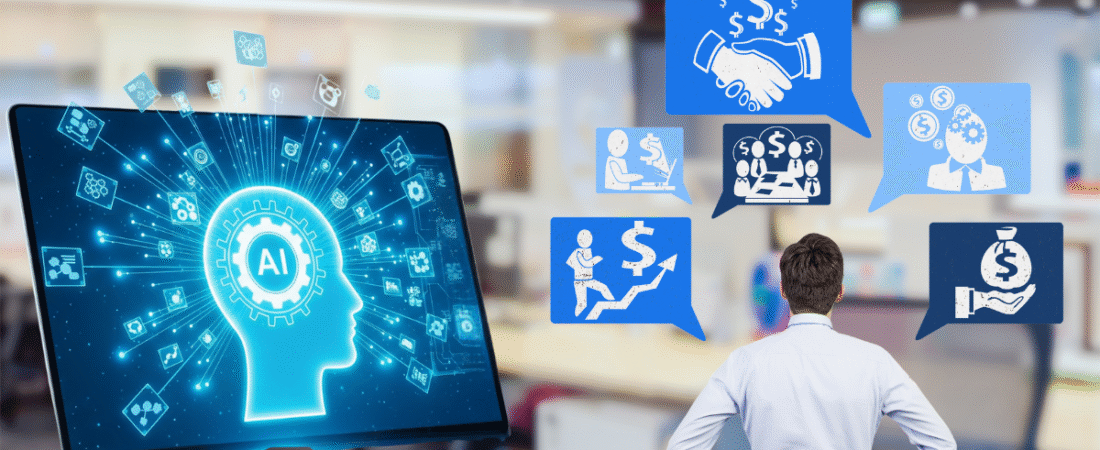
Through 2025, a pattern became apparent across growing companies, AI stopped being treated as a novelty and began to be treated as infrastructure. Earlier conversations about AI were mostly cautious; focused on ethics, accuracy, and whether teams should even use it. By the end of the year that hesitation went away to a great extent. The companies that performed better weren’t the ones using more AI tools, but the ones that were using them more intentionally.
Instead of scattered experiments, leading businesses incorporated AI into daily workflows. Canva’s own internal example illustrates this change well. When the company halted operations for a week to train more than 5,000 employees on AI use, the aim wasn’t productivity theater. This was capacity-building. Teams learned how to combine AI speed with human judgment, which reduced rework and improved output quality. This maturity gap is now one of the clearest dividers between market leaders and lagging competitors in 2026.
Brand Consistency Became a Revenue Issue, Not a Design Preference
Brand sustainability has always been discussed as a creative concern, but in 2025 it became a measurable business lever. The old model, static brand guidelines stored in PDFs and manually implemented, couldn’t keep up with the pace. As the volume of content grew, inconsistencies multiplied, often unnoticed internally but felt externally by customers.
What changed was how brands operationalized sustainability. Tools like Canva’s Brand Systems allow brand rules to live directly inside everyday work, not outside of it. The DocuSign rebrand example clearly shows the impact. A relatively small creative team was able to produce a complete rebrand across thousands of assets in months, not years, because brand controls were embedded in templates and workflows. This freed creative teams from constant policing and allowed non-designers to safely produce on-brand content. The results were not just better visuals, but faster execution and stronger trust signals, which directly impacts revenue.
Visual Communication Replaced Text as the Default Business Language
By 2025, visual communication is no longer limited to marketing or design departments. Sales decks, internal updates, strategy proposals and even operational plans are increasingly relying on visuals to communicate more clearly. Business leaders observed that text-heavy communication slowed decision making, while visual formats reduced ambiguity.
The research cited by Canva supports this behavioral change. Most leaders reported that visual content helped teams make decisions faster. Additionally, employees in various roles expressed a desire to create visual content without requiring professional design skills. This combination changed expectations. Visual fluency became a basic requirement, not a “nice-to-have” skill. Companies that reduced device fragmentation and centralized view creation saw better alignment and less delay.
Speed of Content Creation Turned Into a Competitive Advantage
Demand for content doesn’t just grow in 2025; it burst. More platforms, more formats, more regions and more personalization meant teams were under constant pressure to produce quickly without sacrificing relevance or quality. Businesses that relied on disconnected tools and manual workflows struggled to keep pace.
The companies that stayed ahead considered speed as a strategic capability. By consolidating brand, design, and AI tools into a single platform, they enabled more people to contribute without breaking continuity. The EXP Realty example highlights this change. Agents can create local marketing materials in minutes and adapt them to different languages within hours. It wasn’t just operational efficiency, it directly impacted market response, which matters in competitive, time-sensitive industries.
Heading Into 2026, Perfection Is Giving Way to Authentic Expression
While businesses became more organized internally, an opposite trend emerged creatively. Canva’s 2026 design outlook points to a move away from sophisticated, algorithm-driven aesthetics toward something more human. The theme “imperfect by design” reflects widespread cultural fatigue with overly sophisticated content that feels manufactured.
Creators are becoming more comfortable using AI as a partner rather than a director. While AI drives creation, the emotional tone is shaped by human instincts; curiosity, imperfection, and personal expression. Trends like tactile textures, lo-fi visuals, cinematic storytelling, and scrapbook-style layouts all point to the same idea: audiences are responding more to authenticity than technical perfection.
Importantly, this is not a rejection of AI. Most of the creators surveyed still consider AI essential. The difference is control. In 2026, the creative edge belongs to those who know when to rely on AI and when to deliberately break its patterns.
What This Means for Businesses Moving Forward
The combined message of both reports is simple. The information age is over. Access is no longer a differentiator. The advantage now lies in how quickly teams can turn ideas into meaningful, coherent, and human-centered outputs. Businesses heading into 2026 are expected to balance two forces simultaneously: structured systems that ensure speed and stability, and creative freedom that allows for imperfection and authenticity.
Companies that can hold both will not simply survive. They will define what effective communications and brand expression will look like in the next phase of work.
Final thoughts
To bring everything together, the defining change from 2025 to 2026 is not about tools, trends, or even AI. It’s about ultimately aligning intent and execution. Businesses now operate in an environment where speed is expected, stability is assumed, and visual clarity cannot be compromised. AI has removed many old barriers, but it has also raised the bar. While everyone can build faster, the real advantage goes to those who know what to build, why it matters and when to act.
At the same time, the move to “incomplete by design” signals a healthy improvement. As systems become more automated, audiences are drawn to work that feels human, thoughtful, and genuine. The brands that will perform best in 2026 are not the most sophisticated, but the most consistent. They will use AI to protect continuity, empower teams, and accelerate delivery while allowing room for individuality, cultural nuances, and creative decision-making.
In practical terms, the future belongs to organizations that treat brand systems as business infrastructure, visual communication as leadership skills, and AI as collaborators rather than shortcuts. The people who make this change are just not accepting the change. They are shaping how modern work, branding and creativity will be defined in the years to come.